
Discover Western and Central Vietnamese Rice Pancake
Bánh Xèo, often referred to as Vietnamese rice pancake, is one of Vietnam’s most iconic dishes. Known for its crispy golden crust, savory fillings, and fresh herbs, this traditional specialty is enjoyed throughout the country.
However, depending on the region, rice pancake can look and taste quite different.
Among the many variations, Western Vietnamese rice pancake (Mekong Delta style) and Central Vietnamese rice pancake are the two most popular styles, each reflecting the local culture, ingredients, and culinary traditions of its region.

What Is Bánh Xèo(Vietnamese Rice Pancake)?
Bánh Xèo is a savory Vietnamese pancake made from rice flour, water, and turmeric, which gives the batter its signature yellow color.
The name “Bánh Xèo” comes from the sizzling sound made when the batter is poured onto a hot pan.
The pancake is typically filled with shrimp, pork, bean sprouts, and vegetables before being folded in half and cooked until crispy.
It is traditionally served with fresh herbs, leafy greens, and a dipping sauce, creating a perfect balance of textures and flavors.
Today, bánh xèo is not only a beloved local dish but also a must-try food for visitors exploring Vietnamese cuisine.
Regional Differences in Vietnamese Bánh Xèo
As with many traditional Vietnamese dishes, bánh xèo varies from region to region. Differences in size, ingredients, cooking techniques, and serving styles reflect the diversity of Vietnam’s food culture.
Western Vietnamese rice pancake – A Taste of the Mekong Delta
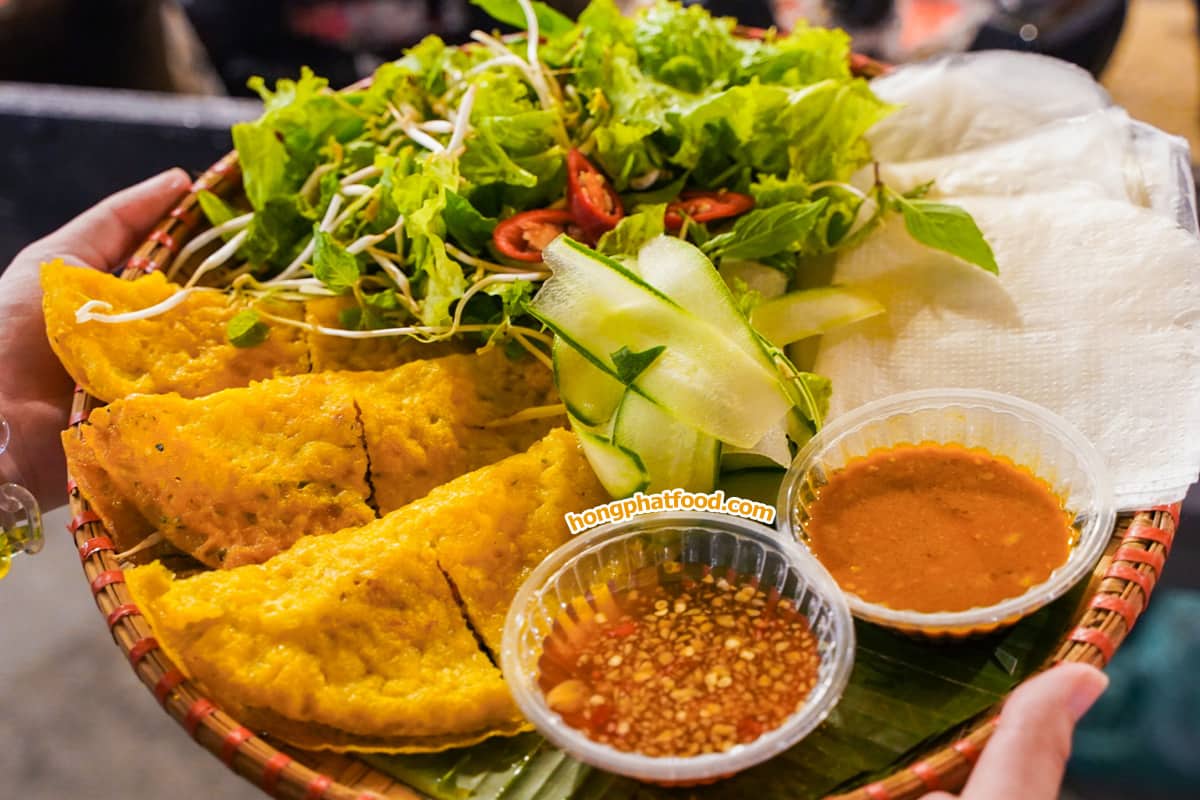
Western Vietnamese rice pancake, commonly found in the Mekong Delta, is known for its generous size and abundant fillings. It reflects the region’s rich agricultural resources and plentiful seafood.
Characteristics of Western Vietnamese Bánh Xèo
-
- Large and Hearty: Mekong Delta-style rice pancake is often much larger than other regional versions, sometimes large enough to be shared by two or three people.
- Crispy Pancake with Coconut Flavor: A defining feature of Western Vietnamese bánh xèo is the use of coconut milk in the batter. This adds a subtle sweetness, a rich aroma, and an appealing golden color.
- Generous Fillings
- Typical fillings include: Shrimp, Pork belly, Bean sprouts, Mung beans, Coconut heart (củ hủ dừa), Various seafood or mushrooms
- Served with Plenty of Fresh Herbs
One of the highlights of the Mekong Delta style is the wide variety of fresh vegetables and herbs served alongside the pancake. Popular choices include mustard greens, lettuce, fish mint, wild herbs, and local leafy vegetables.
The combination of crispy pancake, savory fillings, and fresh greens creates a balanced and refreshing eating experience.

Central Vietnamese rice pancake – Small in Size, Big in Flavor
Unlike the larger Mekong Delta version, Central Vietnamese rice pancake is smaller, crispier, and known for its bold flavors.
It is especially popular in provinces such as Bình Định, Quảng Ngãi, Phú Yên, Khánh Hòa, and Huế.
Characteristics of Central Vietnamese rice pancake
-
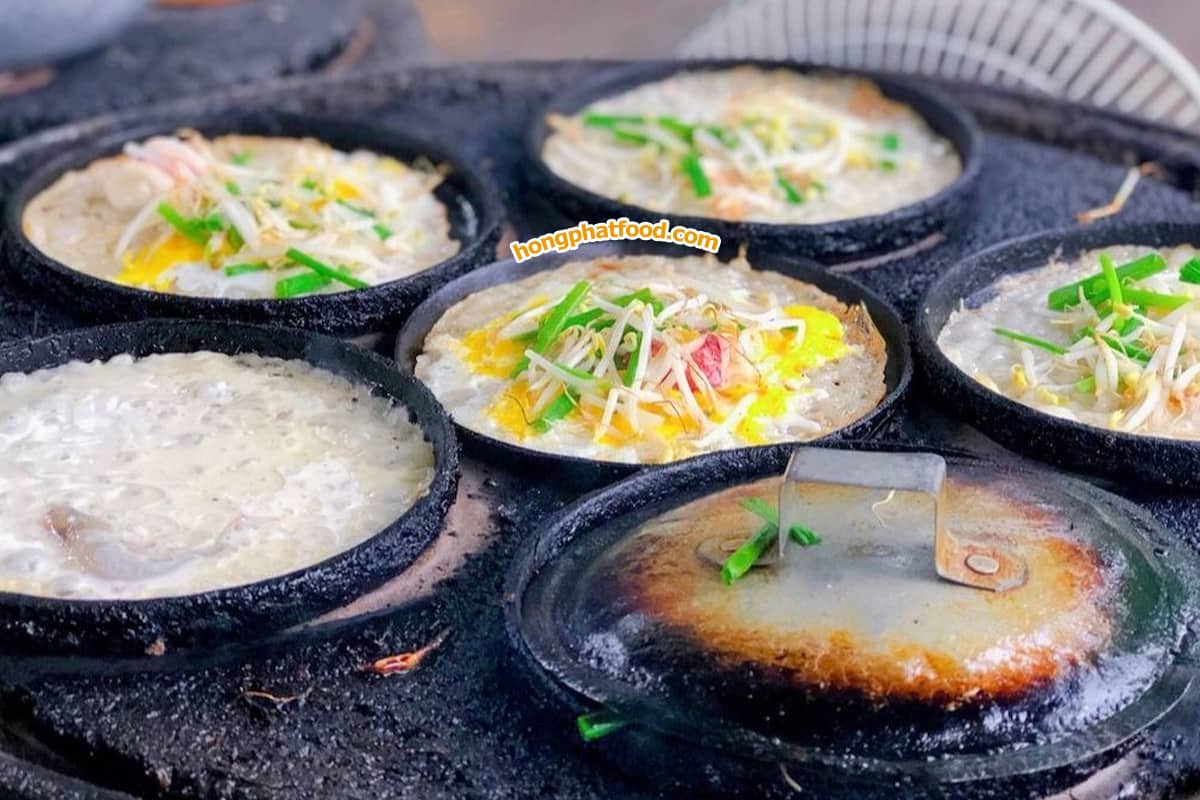
- Small and Bite-Sized: Central Vietnamese rice pancake is usually cooked in small round molds or pans, resulting in compact pancakes that are perfect for individual servings.
- Thin and Extra Crispy: The batter typically does not contain coconut milk, producing a thinner and crispier texture that stays crunchy longer.
- Simple Yet Flavorful Fillings
- Common fillings include: Shrimp, Pork, Bean sprouts, Green onions,… In coastal areas, fresh squid and seafood are also popular additions.
- Bold and Savory Dipping Sauces
- Instead of the sweeter fish sauce often served in the South, Central Vietnamese bánh xèo is frequently paired with stronger dipping sauces such as: Garlic chili fish sauce, fermented anchovy sauce (mắm nêm), fermented soybean sauce
These sauces add a deeper and more intense flavor to the dish.
Different ways of enjoying Vietnamese rice pancake
The way rice pancake is eaten also varies by region.
In the Mekong Delta
-
- Large pancakes are cut into smaller pieces.
- Wrapped in rice paper or mustard greens.
- Combined with a variety of fresh herbs.
- Dipped in sweet and tangy fish sauce.
In Central Vietnam
-
- Smaller pancakes are often eaten whole.
- Served with fewer herbs but stronger dipping sauces.
- The focus is on the crispy texture and rich flavors.
- No matter where it is enjoyed, bánh xèo offers a delicious combination of crunch, freshness, and savory goodness.
Tips for making crispy rice pancake
If you want your rice pancake to stay crispy for longer, here are a few useful tips:
-
- Choose the Right Flour: Rice flour is the foundation of a good rice pancake. The quality and starch content of the flour directly affect the crispiness of the pancake.
- Mix the Batter Properly: A batter that is too thick can result in a dense pancake. A thinner batter helps create a light and crispy texture.
- Let the Batter Rest: Allowing the batter to rest for 20–30 minutes helps the ingredients combine evenly and improves the final texture.
- Preheat the Pan Thoroughly: A hot pan ensures the batter cooks quickly and develops a crisp, golden crust.
- Avoid Excess Moisture: Too much steam can soften the pancake. Cover the pan only briefly while cooking the fillings.
Popular ways to make Vietnamese rice pancake
There are two common approaches to making rice pancake at home.
Using ready-made rice pancake flour
Ready-made pancake flour is a convenient choice for home cooks and food businesses alike.
Benefits include:
-
- Saves preparation time
- Easy to use
- Consistent results
- Ideal for beginners
- Simply follow the instructions on the package and adjust the flavor to suit your preference.
You can consider using bánh xèo flour mixes from well-known brands such as DAKI, Taiky, and Hương Xưa for convenient preparation and consistent results.
Mixing your own flour blend
For a more traditional approach, many cooks prefer to mix their own flour.
A basic recipe may include: 200g rice flour, 30g tapioca starch, 20g cornstarch, 400–500ml water, 100ml coconut milk (optional), Turmeric powder, Beer(It helps make the rice pancake crispier)

Conclusion
Whether you prefer the large, coconut-infused pancakes of the Mekong Delta or the smaller, extra-crispy version from Central Vietnam, both styles showcase the diversity and richness of Vietnamese cuisine.
Their unique ingredients, cooking methods, and serving traditions make rice pancake a favorite among locals and international food lovers alike.
As one of Vietnam’s most recognizable dishes, rice pancake continues to introduce authentic Vietnamese flavors to tables around the world.